Feeble Gasps of a Fatigued Franchise
[_There is no such thing as an objective review. Interpretations and opinions of all forms of art and expression are subjective._] Barring anthologies, there are two kinds of long-running franchises: 1. Ones that allow their characters to grow along with their audience. 2. Ones that maintain their status quo. _Mahou…
続きを読む
[_There is no such thing as an objective review. Interpretations and opinions of all forms of art and expression are subjective._]
Barring anthologies, there are two kinds of long-running franchises: 1. Ones that allow their characters to grow along with their audience. 2. Ones that maintain their status quo.
_Mahou Shoujo Lyrical Nanoha_ was originally conceived as a spinoff to _Triangle Heart._ It easily eclipsed its progenitor, spawning a dedicated audience, and was a great deal responsible for propelling its seiyuu into superstardom. Since 2004, _Nanoha_ has seen six seasons of television, four films, and a few manga series. _Nanoha Exceeds Gun Blaze Vengeance_ is the first new television anime since _ViVid Strike_ (2016), and that was more of a spinoff, not even bearing Nanoha’s name.
Between the end of the third consecutive season of _Nanoha_, _StrikerS_ (2008) and the unsuccessful manga _Magical Record Lyrical Nanoha Force_ (2009-2013), the franchise took a massive blow in popularity. In order to keep it alive, it received a soft reboot, beginning with the first two films that retold their respective seasons. These were followed by the subsequent film duology of _Reflection_ and _Detonation_. _Exceeds Gun Blaze Vengeance_ corresponds to this soft reboot. Yet despite all this, the show feels lost and confused.
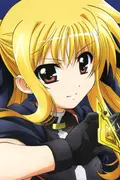
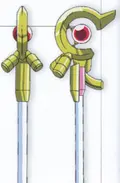
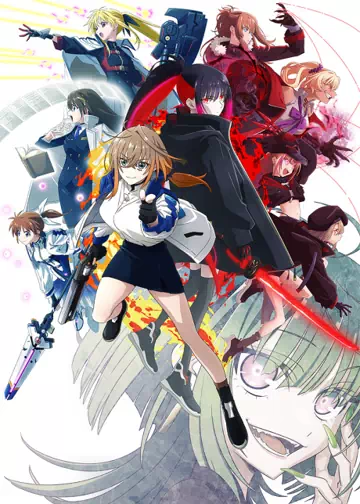
_Exceeds Gun Blaze Vengeance_ introduces so much newness, and that should be exciting: a new composer, fresh aesthetics that make it visually distinct from all its predecessors, even new voice actors for the beloved weapons Raising Heart and Bardiche. But most significantly, there’s a new heroine.
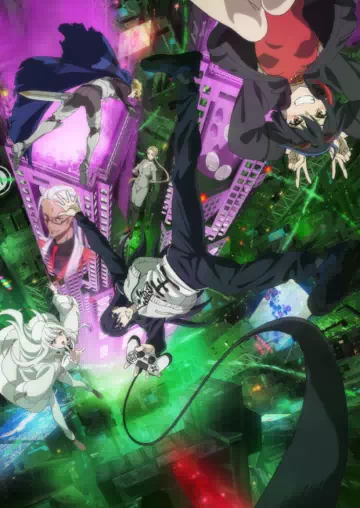
Shiina, a friendly neighborhood teenager, lives with her younger sister on a small island. However, their quiet town is inhabited by monsters. Shiina takes it upon herself to protect her home and those within it by hunting such beasts. When chaos and loss arrive at their door, Shiina leaves home alone and sets her noble ambitions higher.
From the very start, Shiina is front and center—the star of the show. The characters who have defined _Nanoha_, Fate, Hayate, and Nanoha herself, are sidelined, with pathetically little screen time and given hardly anything to do within _Exceeds Gun Blaze Vengeance_’s already bare narrative. This begs the question: Why is Nanoha’s name even in the title of this thing?
Shiina and her frenemy, Towa, are at the heart of the story…what little of it there is. _Exceeds Gun Blaze Vengeance_ goes nowhere slowly, somehow managing to make a twelve episode action, sci-fi and magical girl series feel like nothing of true importance happens most of the time. Towa faces a massive monster that was once the object of her nightmares and kills it in five seconds. A bomb explodes in Shiina’s train car and she walks away with barely a scratch. _Exceeds Gun Blaze Vengeance_ spends half of its time in flashbacks and has only one conflict, with nothing else going on aside from that. And most of what occurs within this singular plot is little more than old ground retreaded.
Since the very beginning, _Nanoha_ has always had two core themes: How children can be abused and mistreated by adults, and found family. _Exceeds Gun Blaze Vengeance_ maintains these, but fails to do anything new with them. Everything presented is just a much weaker version of what _Nanoha_ has done before: - The four Diaboli Slayers--who are completely devout to Towa due to the fact she showed them kindness--are mirrors to the Wolkenritter, down to the numbers and motivation. - Towa was tortured at the hands of a mad scientist, and then was adopted by kind people. Both of these are two defining aspects of Fate’s character. - The lotus eater machine visions from _A’s_ return briefly, and the characters in question don’t even have to struggle to separate themselves from such perfect and desirable dreams.
On one hand, sure, this is thematic cohesion. On the other, it’s little more than cyclical derivativeness in the guise of a reboot.