NIPANIPA 이용자
아직 리뷰가 없어요.
리뷰 쓰기
NIPANIPA 이용자
아직 리뷰가 없어요.
리뷰 쓰기AniList
78/ 100
In a remote mountain village under the watchful eyes of two stone guardians, the young Yuru contentedly lives off the land while staying close to the only family he has left—Asa, his precious twin sister. Asa, meanwhile, carries out a mysterious “duty” on behalf of the village while locked in a cage. Why is Asa a prisoner? And what other secrets does Yuru’s otherwise idyllic home hide?
(Source: Square Enix)
출처: AniList · 영어 원문
Daemons of the Shadow Realm was one of the two anime that started airing this spring that had a very heavy weight of expectations on their shoulders because of the previous works of their creators. Because of that, they naturally experienced many different comparisons, and sometimes those comparisons were pretty…
Daemons of the Shadow Realm was one of the two anime that started airing this spring that had a very heavy weight of expectations on their shoulders because of the previous works of their creators. Because of that, they naturally experienced many different comparisons, and sometimes those comparisons were pretty unfair. In the case of Daemons of the Shadow Realm, the creator of the series is Hiromu Arakawa, the creator of one of the most well known anime and manga series in history, Fullmetal Alchemist.
And when it comes to expectations, the common way people usually look at something like this is that if a new work is expected to be good because of its creator's previous work, then it should either be better than the previous work, be around the same level, or be somewhat below it and still be considered acceptable. Otherwise, the new anime is considered disappointing.
There are two problems I have with this way of thinking. The first is that the independent identity of the anime being discussed is completely put into question, whether that is its story, characters, or other aspects. The second is that the third part of this common way of thinking, the idea that a new work can still be acceptable even if it is somewhat below the creator's previous work, is often just something people say. There are countless examples where, in practice, this part is not actually considered acceptable at all. The first two parts are what really affect this mindset.
This kind of expectation and comparison, as I mentioned, ignores the independent identity of different works. Many works that have suffered from this are similar in certain elements because of the writing style and design choices of their authors and manga creators, but they can still have many fundamental differences. Those differences are often ignored because the independent identity of the work, especially the newer one, is not taken into consideration.
For me, when I have expectations for a work because of its author, it means that I have already experienced at least two works from that author that had a huge impact on me. After that, whenever I read or watch another work from that creator, my expectation is actually very different.
From the very first moment I start watching that work until the very last moment, I look deeply for every positive aspect it has, and I try to find answers to every criticism that is made against it, unless the work has some serious ethical problem, which has never happened to me in this situation. I do this because of the trust I have in that author.
But with Hiromu Arakawa, I did not have that kind of expectation for Daemons of the Shadow Realm.
Of course, Fullmetal Alchemist is a masterpiece for me, and I was actually rewatching it before Daemons of the Shadow Realm started airing. But having one work alone does not make me examine an anime with the mindset I described above.
The reason I explained all of this is because when I say that Daemons of the Shadow Realm is an incredibly great anime in terms of writing and many other aspects that I will talk about later, it is not because I was looking for greatness in it from the very beginning.
The anime itself showed me its greatness.
And that not only makes me value the anime much more, but it also made Hiromu Arakawa an author whose future and previous works I will now look at with the kind of expectations I described earlier.
I feel like I have explained everything I wanted to say about this part, but while writing it, I kept thinking about this reference in my head. Is Hiromu Arakawa an amazing manga creator because she is Hiromu Arakawa, or is she Hiromu Arakawa because she is an amazing manga creator? I did not get the chance to properly fit that thought into the earlier part, so I wanted to add it here at the end.
In my opinion, Daemons of the Shadow Realm could genuinely be used as a reference for how to write a story and its characters.
The way this anime uses different story el
[This contains moderate spoilers.] I only write this because this show has underlying qualities that are being held back by one major issue. Let's address the elephant in the room. As expected, this has similar qualities to FMA—in particular, because I haven't seen other Arakawa works yet—in the form of believable and…
[This contains moderate spoilers.]
I only write this because this show has underlying qualities that are being held back by one major issue. Let's address the elephant in the room.
As expected, this has similar qualities to FMA—in particular, because I haven't seen other Arakawa works yet—in the form of believable and complex characters, though also similar flaws, such as the tone-deaf jokes and a morally ambiguous presentation of characters. In that last point, note that I do not say moral grayness (which is a good thing and I believe was the norm in FMA), but moral ambiguity: the narrative thinks it's "deceiving" you with tricks, but, in reality, it's just revealing its pre-scripted favoritism towards characters through its inability to properly acknowledge the severity of moral deviation.
This is its greatest flaw, and it's most obvious in the case of the Higashimura genocide in Ep. 1. See, the thing that makes me like a morally gray character is that they do objectionable acts, but this creates understanding in the story; it's not enough for the character to understand oneself as guilty, we must also understand their will and sympathize with their desires and objectives. Here, the author expects us to sympathize with Gabi and Asa right away after an act of mass murder, and it expects it with such with levity and lightheartedness that it borders on being disrespectful, if not insane. It is egregious to get "onii-san!" jokes while Azami is lying in bed suffering PTSD after witnessing gruesome violence at the earliest age.
We know nothing of Asa and Gabi's character to justify such a relaxed stance—and, to make matters worse, we are left largely in the dark about anyone's motives regarding the acquisition of Seal and Break and what these folks envision for the future of the clans. In fact, we care little about the clans and understand nothing of their long history. Instead, the narrative brushes aside our immediate concerns and conceal many a dark deed behind misplaced jokes and cutesy moments. What's tragic is that these characters aren't even meant to be trashy yanderes—the author just "forgor" how to write sensible character dynamics and completely blew plot exposition.
It doesn't help that I felt little connection to most of the characters of the Kagemori side (and therefore was not in the slightest moved about the drama of treason inside Kagemori mansion in the latter part of the season).
With all of that addressed, I must say that I admit that Yomi no Tsugai is still, at the very least, an intriguing story with interesting persons. I fell in love with characters such as Tadera, Hana, and the Saiyu-sama. Yuru is also a great, active protagonist, possessing a refreshing straightforwardness and no-bullshit attitude, but still showing talent for quick adaptation and the inclination to pay minute attention to detail, both in survivability as well as in social reading. Tone-deaf jokes aren't universal; the slice of life moments in the breaks of action between tense plot moments feel genuine and truly feel like spending cozy time with these people.
There is a lot of positives to take from this work. It just has a _really_ rough start.
I admit, that perhaps my expectations were unfair going in. I was sold on "Yomi no Tsugai" as being based on a work from the same mangaka as Fullmetal alchemist and I was left disappointed.
There was just something at the heart of Yomi no tsugai that just didn't click with me. I'm glad I keep little notes while I'm watching a show, because I can see that as early as episode 8 I'd realised that something wasn't clicking. Unfortunately, my interest and overall engagement just continued to decline from there, settling into a level close to boredom but not bored enough to completely give up on the show.
What it does well
Before I go into what I think doesn't work, I'll acknowledge that there are definitely some things that do.
I have no real complaints with the animation or action, some of the fight scenes are even quite good. I also think the initial reveal of it being set in the modern world was quite good, as was the initial confusion and mystery.
I also ended up liking a character (it's Ivan, he's cool).
My issues
There are a few core issues that I believe are the source of my disinterest from this show.
1: Yuru
I just don't think he's that interesting a protagonist. I've seen some people praising him, but I just don't get it. I'm not going to go as far as calling him a bad protagonist, I just think he's not especially a good one. He's a perfectly ok protagonist, but nothing more. I wish the show had done more with him having to adapt to modern japan, instead of it basically only being used as a comedic bit.
Unfortunately, this lack of interest in Yuru kinda makes the whole show fall apart a bit for me. If I don't care about him, I also find it hard to care about his main goal which is kinda the underpinning motivation/driver for the plot.
2: Everyone else
There's just a lot of characters who get not much focus who the show then expects us to care about, or otherwise just sorta exist there to take up space. The most egregious example is a spoiler:
It's Akio. I just don't care about him, his betrayal, or the random guy he killed. It creates this uniquely disengaging sensation when watching these characters all react so strongly and mourning this random guy (who I genuinely can't remember if he even appears in the show before he gets killed). Akio honestly felt closer to a background character then even a side character at times, and just simply did not get enough of anything for his betrayal to actually make me feel anything.
3: Pacing
The show is both too fast paced and way way too slow. What do I mean by this? Something is always moving, just slowly. I feel like the pacing either needed to slow a bit and mix in some slice of life, or just up the tempo and don't give it time to settle down.
As it is, the pacing could best be described as meandering. lethargically moving between action scenes and dialogue scenes that slowly drip-feed information and world building. I think you could genuinely cut it down by 4 episodes and it would be an improvement. (that or slow it down enough to have more slice of life moments or "side quests" to actually develop the wider cast.)
4: The appearance of nuance
I feel like the design brief was "create a conflict that isn't black and white", and the show goes about it in such a bad way. There are moments where I swear characters may as well turn to the camera and go "see, it's not black and white, both sides have extreme factions". But then go on to have the higashi village faction literally just be evil. It just all falls flat for me.
The show also has a strange inability to actually properly introduce things. The worst example being:
Shingo and his whole gang. We get basically drip fed information about them while they're basically acting as the main villains for that arc. Shingo has such a non-presence and his whole time spent as an antagonist just feels like setup for ivan and his village.
Summary
I can't be bothered to think about this show anymore, so I'll just come to
I was really excited to watch this anime because it was created by the same author as Fullmetal Alchemist: Brotherhood Honestly, I feel this anime should have been handled more like FMA:B, with a tighter story and better pacing. It takes around 14 episodes for the plot to finally open up. Until then, most of the…
I was really excited to watch this anime because it was created by the same author as Fullmetal Alchemist: Brotherhood
Honestly, I feel this anime should have been handled more like FMA:B, with a tighter story and better pacing. It takes around 14 episodes for the plot to finally open up. Until then, most of the episodes focus on world-building, introducing characters, and action sequences. This gets frustrating after a while. You have to watch it with the same mindset as Naruto or One Piece, trusting that the main story and conflict will eventually develop. The problem is that the buildup here isn't particularly engaging.
When the story finally gets interesting after episode 14, you end up with a lot of questions, partly because the earlier episodes don't do a great job of keeping you invested. Another major weakness is the bond between the siblings. The relationship between the Elric brothers in FMA:B felt genuine and emotionally convincing, but the bond between the siblings here doesn't come anywhere close.
Despite having good writing, the anime struggles to hook you beyond the second episode. Some characters also feel rather bland, with Gabby being one example.
That said, there are some twists that, while not mind-blowing, feel natural and don't come across as forced. Some of the daemons' powers are also quite interesting and add to the appeal of the story.
Another issue is that the anime doesn't properly explain why the villagers were killed, even though this is one of the story's major plot points. I had to rewatch certain parts and read online discussions to understand what was actually going on. Once I finally understood the reasoning behind it, the story made much more sense to me.
Spoilers ahead
The villagers wanted both siblings dead because they wanted to control their powers. They managed to kill Asa, but things didn't go as planned because they hadn't expected her to fight back and break the barrier. With Yuru, things were more complicated. They couldn't kill him directly because he had a strong instinct for sensing murderous intent. So, instead of confronting him themselves, they tried to use bandits to get rid of him.
From the beginning, the anime presents two factions: the villagers and the Kagemori family. At one point, it becomes clear that there are traitors among them, which is true, but the reason behind their actions is never properly explained. In the final episode, the anime also introduces another faction, the West Village, but its sudden appearance feels lackluster and underdeveloped. The story takes too long to develop, and introducing new characters and factions so late in the series makes their appearances feel forced. Overall, I think this anime would have worked much better as a continuous series rather than being divided into seasons.
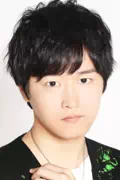
 Yuru주연성우Kenshou Ono

 Asa주연성우Yume Miyamoto

 Edward Elric
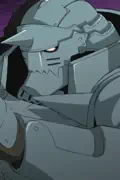 Alphonse Elric

























아직 글이 없어요. 첫 글을 남겨 보세요.
내 시청 상태