


NIPANIPA 이용자
아직 리뷰가 없어요.
리뷰 쓰기
NIPANIPA 이용자
아직 리뷰가 없어요.
리뷰 쓰기AniList
89/ 100
After last season’s revelations, the Soma family moves forward, but the emotional chains that bind them are not easily broken. Unable to admit why she wants the cure, Tohru wrestles with the truth, aware that time is running out for someone close.
And a secret still lurks that could break another’s heart. But hope is not lost—a clue to the curse is found. Could their imprisonment’s end be near?
(Source: Funimation)
Note: This season premiered on Funimation and AnimeLab on March 20, 2021. The Japanese broadcast started two weeks later on April 6, 2021.
출처: AniList · 영어 원문
 얼음 성벽 2기TV · 2026 · 83%
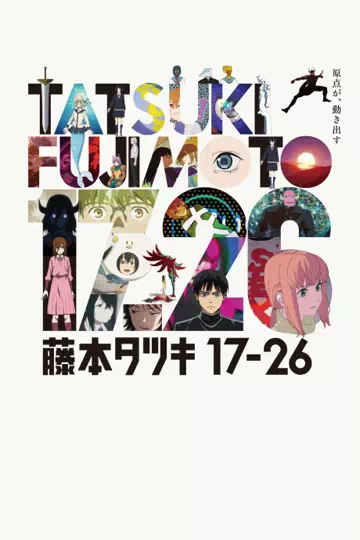 후지모토 타츠키 17-26극장판 · 2025 · 79%
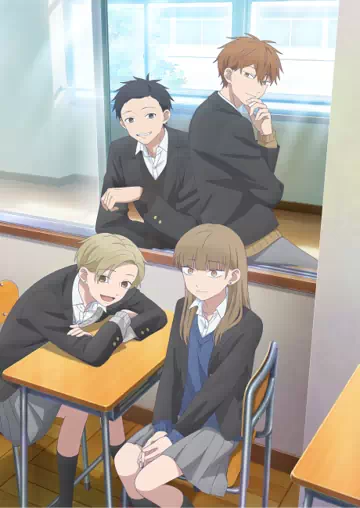 얼음 성벽 제2기TV · 2026 · 82%
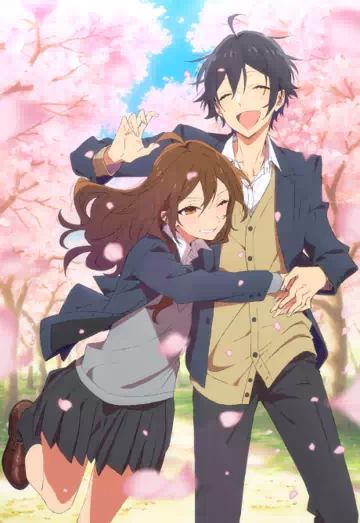 호리미야TV · 2021 · 81%
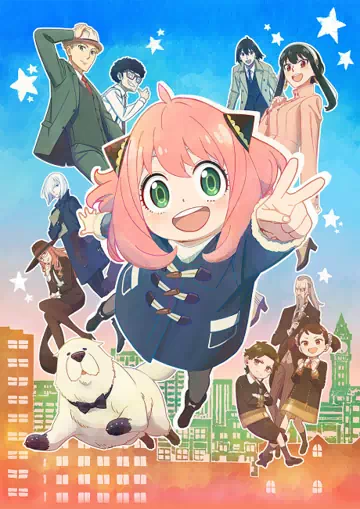 스파이 패밀리 2쿨TV · 2022 · 81%
 카구야 님은 고백받고 싶어 -울트라 로맨틱-TV · 2022 · 89%
 밤의 노래TV · 2022 · 79%
 SPY×FAMILY Season 2TV · 2023 · 80%
 카구야 님은 고백받고 싶어 -첫 키스는 끝나지 않아-TV · 2023 · 87%
 밤의 노래 Season 2TV · 2025 · 84%
 위치 워치TV · 2025 · 72%
 정반대인 너와 나 2기TV · 2026 · 84%
_This review is both for the entire series and spoiler free._ Even though we are the ones who completely embody it, human emotion and their inherent nature is a topic that is vague enough to unassuming eyes, that it may be considered impossible to understand. With there being no true concrete answer as to what…
_This review is both for the entire series and spoiler free._
Even though we are the ones who completely embody it, human emotion and their inherent nature is a topic that is vague enough to unassuming eyes, that it may be considered impossible to understand. With there being no true concrete answer as to what comprises the deeper parts of our minds, problems with depicting that complex nature in a story will always arise. A lot of stories that strive to be more than what they are expected to try to write its characters in a way for them to feel human. What constitutes as human strays into the vague territory of the subject that it even derives from. This vague territory is the reason why it is extremely daunting to incorporate in a story. To get a true method for portraying human characters is impossible, and to get anywhere close to is a challenge many aren’t willing to take. This is why a great deal of stories primarily feature one dimensional characters that are idealizations of a certain archetype. While this approach to character can work well in certain contexts, for stories that mainly surround characters like it, the story lacks the capability to make the audience feel a far wider range of emotions. When stories actually do try to venture into the aforementioned vague territory, the results can produce some of the best stories ever created. While the true extent of the vague territory is unknown, even an understanding of a small part of it can provide a great deal of emotion and meaning.
Enter Fruits Basket.
/cdn.vox-cdn.com/uploads/chorus_asset/file/13455600/Fruits_Basket_protagonists_with_credit_embargo_till_00h00m_20_Nov_2018_JST_1_724x1024.png)
Contrary to popular opinions that said otherwise, my initial impression of this series was one of dissatisfaction. It seemed to me in the beginning that it was a story that revolved around one dimensional characters that didn’t exactly click with me. However, Fruits Basket was pulling a trick. While some didn’t fall for it at all, I was somebody that fell head first into it. While Fruits Basket was lulling me into the notion that it wasn’t doing anything past the status quo, it was actually doing the contrary. In its entirety, Fruits Basket is an emotional ballad that, out of any piece of media I have consumed, is one of the stories that most successfully ventures the furthest into the vague and muddy territory of human emotion.
As Fruits Basket’s approach to character writing evolves, the method as to how characters are developed gets slowly better and better, until it becomes nearly perfect by the Final Season. The general method of character development with Fruits Basket’s method doesn’t really change throughout the series, but it is so volatile and utilized so well, that it isn’t remotely repetitive in the slightest. This method starts with the initial impression. This initial impression is in a character’s introduction, where you learn about a character’s extremely base character traits. From this initial view into a character’s world, you can initially write them off as one dimensional at the start. The series does a very good job at hammering these traits in. This series very easily creates some of the most detestable images for a character that I have ever seen in a story before. Even if the hammering in seems like it is counterintuitive at first, it serves a deliberate purpose in later developments of the story. After our initial impressions of a character has set in, the show immediately asks a vital question about the character in question that will permeate throughout the rest of the series. Why?
Answering as to why a character would act a certain way isn’t exactly a new question that stories have brought up when developing characters, but what sets Fruits Basket apart is in how meticulously it shows this development. For characters that initially started out with one base character trait, they each eventually flourish into very complex, sympathetic, and
Fruits basket , also known as fruba, is a manga written by Natsuki Takaya, which recieved an anime adaptation in 2001. Due to fans not liking the 2001 adaptation, fruba received a reboot
Today morning, the last episode of fruits basket: the final aired in Japan, properly and grandly concluding this wonderful masterpiece
---
FOR PEOPLE LOOKING TO GET INTO FRUITS BASKET-
Fruits basket has 3 seasons, the third season being the final one
2 seasons aired as two cour, while the final aired for 13 episodes. But this in no way is a rushed adaptation. It's an excellently done conclusion
Fruba's genres are drama , slice of life, comedy and romance, but it's main focus is the drama and character development. So if you solely started watching it for romance, you won't find much. However, their are many couples besides our main couple. Almost every character get their happy ending
If someone has told you, "fruits basket is incest"
That's complete bullshit. The characters aren't related by blood. The Sohma family is a large clan than a family, so don't hesitate. It isn't incest
---
MY OPINION OF THE FINAL SEASON
_NOW, SPOILER ALERT IF YOU HAVEN'T WATCHED THE FINAL SEASON_
The final season was fantastic. It develops and explores the characters further. Backstories of characters like Kyo and Tohru were revealed. But it mainly focuses on the antogonist of the series, Akito.
Who we thought was a merciless killer turned out to be a girl who has had a hard life, and still suffers.
Some people have been angry at Akito's redemption, but I disagree. This season did a good job showing Akito's fear of abandonment, amd how much the "bond" she desperately holds on to had been killing her on the inside. She, too, shares a past similar to that of Tohru's.
Being her dad, whom she loved dearly had died before her, leaving Akito with her mother who's not really the best and also is jealous of her. Yes, Akito's own mother is jealous of her. So the zodiac members were all she had. She thought if she was tough on them they'll at least get close to her because of fear. Akito couldn't be more wrong. It drew the zodiac away from her. The bond they shared soon became a burden, and further developed into a curse
So do I like Akito?
The answer is no. But I don't hate her either. I do get angry thinking of the horrible things she did, but I don't dislike her as a whole. She's very complex and one of the best antogonists in anime
---
THE CURSE
>"When did it become a burden? When did a became a "curse"? Where did it go wrong?"
This was probably my favourite quote from this season, said by the first ever god of the zodiac spirits.
Beautiful bonds, when streched long enough can become a burden.
And the true story of why the cat was neglected by the god and other members is even more heartbreaking. Yes, there is a true story of how it all began
"So how and why did it break?"
As Shigure said, the curse had been weakening generation after generation. It was bound to break. After all, nothing is forever
I think it has to do with the acceptance of the cat and Akito finally accepting and letting go.
Tohru and Akito are mostly the reason for the curse breaking. Shigure has a part too, this guy took in Tohru, set her up with Yuki and Kyo , wanted Akito to meet Tohru, everything so that the curse would break
----
THE CHARACTERS AND DEVELOPMENT IN THR FINAL SEASON
Yuki got his development in the last season. Now it's Kyo and Tohru's turn
This season divides into 3 arcs- Akito and the curse arc, Kyo's development and Tohru's development Kyo's development being the last arc. I have already stated my opinions about the curse and Akito redemption.
----
Tohru has always annoyed me. She behaved like a kid, her reactions were over the top and she was too nice and selfless. At first, I hated her. Then while watched season 2 it occured to me
"If Tohru wasn't the way she was the zodiacs would have never been able to move forward"
While watching the 3rd seas
This late review contains three parts; the first part, the second part, and the final part. (Spoilers Ahead!!) Back then, the Shoujo magazine was pretty popular. It’s probably a misconception for the anime community that when it comes to Shoujo magazine, it’s full of moe elements and cheesy romance. The magazine was…
This late review contains three parts; the first part, the second part, and the final part. (Spoilers Ahead!!)
Back then, the Shoujo magazine was pretty popular. It’s probably a misconception for the anime community that when it comes to Shoujo magazine, it’s full of moe elements and cheesy romance. The magazine was dominated to the max, and many anime fans received numerous mangas and anime adaptations like Sailor Moon, Cardcaptor Sakura, Ouran High school Host Club, and many more. But nowadays. not all Shoujo animes are easily popular than Shounen animes. Some of the animes from the Shoujo animes back then were classic but it left unsatisfied for most of the fans of the magazine for its adaptation. And Fruits Baskets is one of them.
Fruits Basket is a romantic comedy-drama from Natsuki Takaya, based from her one of her popular mangas from the Shoujo. I heard from one of my girl classmates that back then, it was pretty popular manga and Shoujo anime until it was butchered by the adaptation of Studio Deen. It’s the first popular anime that made one of my very favorite voice actresses, Yui Horie, debut in her career. Just like in FMA, they received an anime original ending, due to incomplete content of the manga. But later on, the popular Shoujo manga got received a reboot adaptation, revamped the animation, and promised to give it a “Brotherhood” treatment, just like what happened in Fullmetal Alchemist Brotherhood with 63 episodes. But do you think they kept their promise? Let’s dig in! And almost forgot, this is not a reverse-harem!
The Difference between the OG and the reboot;
I’ll keep this short and straight to the point. The adaptation of Studio Deen was like a typical romantic comedy. Whenever you see a usual Shoujo romcom, the OG looks like that. They changed the atmosphere that was intended for the manga, by giving it a romantic and comedy vibe. The animation of Studio Deen was suitable for its vibe until they changed some scenes and added an anime original ending. If you didn’t read the manga, it was pretty enjoyable. However, if you already read it, it will seem that they didn’t give justice to the manga.
The reboot was superior to its adaptation because they followed closely from the manga and the tone shifted from the romantic comedy vibe, into more Slice-of-Life Drama romance. You might say that they gave justice to the manga and the animation revamped into the next level. The better moment from the reboot, was you can feel the true intention of the story from the manga and Natsuki Takaya’s feelings to the audience.
If you want a romcom vibe that you will find funny and fun, watch the OG. But if you want to feel the true essence of the mangaka and its proper story, watch the reboot.
First Part
The story follows Tohru Honda, an orphaned girl that was left to live on her own, in a tent. Until the Sohmas found her and took care of her. Her parents died due to an accident in different ways and she was left on her own, with her friends at school. She knew the Sohma’s family secret that they can be turned into animals, based on their zodiac curse. Thus, her everyday life begins with her new life with the Sohmas. The first part was the only “Introductory Arc” of the series. They introduce the main characters, the side characters, the world, and their demons in themselves. They showed the pain, scars, and how they did end up with themselves. The first part was pretty light-hearted and a bit dramatic. The characters were relatable as their finest and the atmosphere was great. I know that it was slow at first, but it’s a build-up for the upcoming events of the story. If you will invest your emotions and patience, you will find it very interesting. Even Akito, the main antagonist of the story was intriguing, because his character was cruel, evil, and most of all, selfish. The chemistry of the trio was very great, especially their intentions and their presence in Tohru. I like when the characters, especially Tohru’s
[THIS REVIEW CONTAINS HEAVY SPOILERS FOR THE ENTIRE SERIES] _"It's Not Always Easy To See The Good In People. [...] But If You Can Somehow, Find A Way To Believe, Sometimes That's All It Takes To Help Someone."_ Introduction The complexity of human emotion is impossible to comprehend. Why do people act the way they…
[THIS REVIEW CONTAINS HEAVY SPOILERS FOR THE ENTIRE SERIES]
_"It's Not Always Easy To See The Good In People. [...] But If You Can Somehow, Find A Way To Believe, Sometimes That's All It Takes To Help Someone."_
Introduction
The complexity of human emotion is impossible to comprehend. Why do people act the way they do? Why do people _feel_ the way they do? This is one of the hardest jobs a piece of media can take on. Most that do fail in some capacity—and yet. Fruits Basket: The Final not only showcases just this but also does it for so many characters that it’s an absolute wonder and accomplishment in writing. Fruits Basket seems to take the concept of “quality over quantity” and poses the question “what if we had quantity and quality?” Even with the challenge of fleshing out nearly all of the main members of the Sohma family, somehow Natsuki Takaya manages to make some side characters even more interesting and complex than the main Sohma family. In its own right, Fruits Basket: The Final absolutely excels as a brilliant season, but it also excels as the climax to one of anime’s greatest triumphs in romance. On its own, the final season accomplishes two things incredibly well: the pacing and themes of this season are near perfect for the final season of Fruits Basket. Taken in the context of the entire series, the final season also manages to be a stunning finale in how it resolves literally every character arc is presented in its runtime over the years.
The Final
The pacing of the final season was a massive change. People online have argued whether this is a good or bad thing. As compared to the slower and more surgical nature of the previous two seasons. First off, I believe it is a good decision to make the pacing as “fast” as it was. It feels as if the writers had to make some tough decisions when deciding how they wanted this season to pan out. The typical affair when it comes to anime seasons is traditionally 12 or 24-25 episodes. (It’s important I point out this next point is largely conjecture) It’s very rare we get a show with an odd number. So, the writers could have either decided on either of those. There might have been budget constraints that prevented them from making a longer show; I don’t know. That being said, I think the decision to make this a shorter season, rather than dragging it out for an extra 12 episodes was the right call. By making the season shorter, it’s almost as if they were able to make the emotional moments of this season hit that much harder. Good pacing is basically defined by how well an audience is captivated and engaged with a show over the course of its run time. There are many ways to do this; the final season does this with exceptionally captivating moments in the story. [As Reddit user u/MartyMcMcFly ]((https://www.reddit.com/r/movies/comments/7nk4py/what_is_good_pacing/)says, “Good pacing is when the film feels like a good ride. It had nice build-ups and drops that keep your attention and focus. […]” This is exactly what the final season does perfectly. This season had so many impactful and important moments though out, and yet it never was uncomfortable overwhelming. The writers of the show really knew when to take the foot off the gas and offer some comedic relief or something more light-hearted following a scene of incredible and heavy emotions. The best example I can offer to exemplify this point would be the scenes where Ayame shows up. Although he was largely absent from this season, the scenes that he was in were always welcome. This is because he provided a distraction from what was to come, or what had already transpired. Breaking up the pacing was also achieved with some more feel-good moments as well. The scene where Akito finally accepts her femininity showcases this the best. Even though I knew deep down I felt as if Akito had not paid for her crimes in full, that didn’t matter. What did matter was how heartwarming it was to see someone who had repressed their fem
Depois de algum tempo postergando decidi escrever sobre esta história que é uma das minhas favoritas dentre todos os animes que já assisti. Talvez se tivesse escrito minutos após o anime terminar esta review tivesse mais visibilidade. Contudo, o foco não é esse. Venho tão somente ressaltar a beleza por trás de Fruits…
Depois de algum tempo postergando decidi escrever sobre esta história que é uma das minhas favoritas dentre todos os animes que já assisti. Talvez se tivesse escrito minutos após o anime terminar esta review tivesse mais visibilidade. Contudo, o foco não é esse. Venho tão somente ressaltar a beleza por trás de Fruits Basket.
A dificuldade em escrever sobre a obra se dá justamente em escolher palavras que sejam suficientes para expressar o que se sente através desta história que ajudou a formar o caráter de muitos, inclusive o meu.
Fruits Basket, ou simplesmente Furuba, conta a história de Honda Tohru, uma jovem estudante que, depois de perder seus pais se vê sem casa, família, esperança ou qualquer expectativa, passando a morar em uma tenda próximo a um terreno isolado. Após descobrir que o terreno faz parte da propriedade da Família Souma, uma família rica e tradicional, possuidora de muitos segredos, Tohru é convidada a morar na casa dos Souma sendo envolvida, assim, na vida e nos mistérios desta família.
O segredo da Família Souma envolvem uma antiga lenda do horóscopo chinês. O Imperador Jade, que é conhecido como o deus do zodíaco, decidiu fazer um banquete para mostrar sua benevolência. Após ter seu convite recusado pelos humanos o imperador convidou animais em seu lugar e, movidos por enorme gratidão, ambos decidiram fazer a promessa de que estariam juntos para todo o sempre, dando origem, assim, aos espíritos dos animais do zodíaco.
A Família Souma foi escolhida para compartilhar este vínculo, sendo possuídos pelos espíritos dos animais, tão somente para manterem a perpetuidade da promessa. Souma Akito, líder da família, acredita ter uma ligação especial com os outros membros do zodíaco e fará de tudo para manter esta ligação, ainda que para isto tenha que oprimi-los, delimitar suas liberdades, impor medo, punições, ou mesmo recorrer a violência.
Toda essa questão sobrenatural é apenas uma alegoria usada pela autora para desenvolver sua ideia principal, que é a de pessoas superando seus traumas.
Fruits Basket mostra histórias de pessoas que foram vítimas todo tipo de abusos daqueles que mais deveriam lhes proteger: a família
O zodíaco em si representa um espécie de destino. Cada animal representa um "tipo" de pessoa com características peculiares, uma espécie de predestinação imposta desde o nascimento.
A utilização da maldição do zodíaco é uma forma da autora dizer que, através da mudança e crescimento dos personagens, que também podemos conseguir o mesmo. Ainda que isso signifique lutar contra a ideia de predestinação.
O enredo gira em torno da inteligência emocional. Furuba nos apresenta pequenas histórias de diferentes personagens carregadas de situações traumáticas que parecem impossíveis de lidar.
Em Furuba podemos conhecer, por exemplo, Momiji, um ingênuo rapaz que teve memórias de si apagadas da mente de sua própria mãe; conhecemos Hanajima que é constantemente excluída das rodas de amizades por preconceito chegando a sofrer todos os tipos de agressões físicas enquanto ainda criança; Kyo que viu sua própria mãe cometer suicídio e passou a ser tratado por todos do círculo familiar como o culpado por tal ato, sendo considerado como um monstro a ser odiado.
Tente por um momento se imaginar em alguma dessas situações.
Aliás, este é um dos motivos pelo qual Fruits Basket é uma das melhores histórias da indústria. A capacidade de atribuir verossimilhança a cada personagem é impressionante. Constantemente nos enxergamos em algum dos personagens por conta das situações tratadas serem semelhantes a nossa história pessoal.
O núcleo de personagens em Furuba é um dos melhores. Cada um tem o seu momento e importância para a história.
Souma Akito, com sua personalidade completamente perturbada, é sem dúvidas um dos destaques. Dificilmente você não odiará Akito.
Mas isto nos faz entender como pessoas que machucam os outros são as que mais precisam de ajuda.
Akito machuca, agride, fere, na tentativa de esconder




















아직 글이 없어요. 첫 글을 남겨 보세요.
내 시청 상태