


NIPANIPA 이용자
아직 리뷰가 없어요.
리뷰 쓰기
NIPANIPA 이용자
아직 리뷰가 없어요.
리뷰 쓰기AniList
78/ 100
This romantic comedy revolves around an antisocial high school student named Hikigaya Hachiman with a distorted view on life and no friends or girlfriend. When he sees his classmates talking excitedly about living their adolescent lives, he mutters: "They're a bunch of liars." When he is asked about his future dreams, he responds: "Not working." A teacher gets Hachiman to join the 'Volunteer Service' club, which happens to have the school's prettiest girl: Yukinoshita Yukino.
(Source: Anime News Network)
출처: AniList · 영어 원문
 토라도라!TV · 2008 · 77%
 五等分的新娘∬TV · 2021 · 79%
 패배 히로인이 너무 많아! 2기TV · 2024 · 80%
 극장판 5등분의 신부극장판 · 2022 · 78%
 약캐 토모자키 군 2nd STAGETV · 2024 · 70%
 얼음 성벽 제2기TV · 2026 · 82%
 와타리 군의 XX가 붕괴 직전TV · 2025 · 66%
 하이큐!!TV · 2014 · 83%
 카구야 님은 고백받고 싶어 ~천재들의 연애 두뇌전~TV · 2019 · 83%
 Charlotte(シャーロット)TV · 2015 · 75%
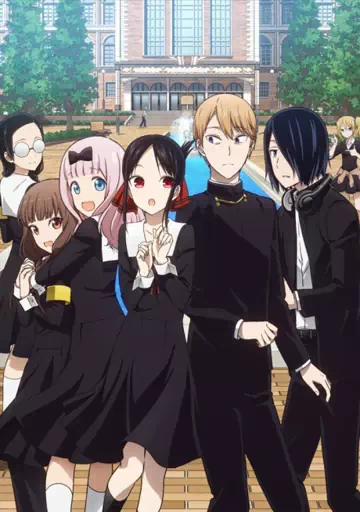 かぐや様は告らせたい?~天才たちの恋愛頭脳戦~TV · 2020 · 85%
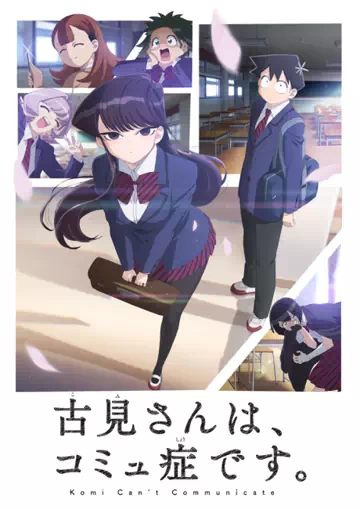 코미 양은 커뮤증입니다TV · 2021 · 76%
This review is meant for all three seasons!! When it comes to most RomCom's out there, they usually have the same generic-cliche trope. The girl liking the boy for no reason, just for plot and drama, instead of focusing on the relationship and real life. Our faces end up get shoved with unnecessary fanservice, not…
This review is meant for all three seasons!!
When it comes to most RomCom's out there, they usually have the same generic-cliche trope. The girl liking the boy for no reason, just for plot and drama, instead of focusing on the relationship and real life. Our faces end up get shoved with unnecessary fanservice, not natural just for flashing some delicate parts. Sure, we can't deny we like to see some racy elements now and then. But it's only eye-candy with no relation to the story, nor does it add any nuance to the cast. No, it only serves as a way to ruin the flow of the storytelling, if anything. This is frequently dished out in most RomCom to keep the viewers interested, but for the wrong reasons. I don't mind fanservice but make it has some purpose if you're gonna flaunt it like that in our faces regularly. Or try to not flex it almost all the damn time.
If it's not useless and forced fanservice, it's creating drama by letting the characters move based on set decisions. This means acting in the way the situations tells you to over feeling genuine. Not to mention, you can't forget pouring on the waifus to attract more audience. But instead of fleshing them out, they get used to the same thing repeatedly with the typical set of personalities but nothing more. Such as being a tsundere, a shy girl, onee-san type, perhaps even an imouto type. Why not? It just adds more content to deal with you're not going to go anywhere with or is even not remotely contributing to characters. Either it gets stale quickly or goes to plant the seeds for the show's ruin since nothing gets solved, and everything ends up becoming a mess.
That's where Oregairu comes in, one of the best RomCom out there and for clear and feasible reasons. Not only does Oregairu avoid most of the issues the romance genre tends to have. The one with forced-fanservice, not letting the character develop beyond their pre-established traits. It has excellent use of dialogue that's sharp-witty and is very refreshing. If you know about Monogatari by the brilliant Nisiosin. In that case, you can see the similarities in Oregairu with how the characters speak to each other. It's intriguing and striking, with a big dash of maturity. It does not waste much of its dialogue. It got tons of nuance in there and depth that can mean a lot more than you might give it credit for. Instead of giving us dialogue, that's easy to interpret. Oregairu does things straightforward but does not convey the words directly but with a sense of vagueness. Like saying "I love you" or something similar gets across by using the environment, the characters' traits, emotions, or a personal link to a moment or thing, they could have from the past. It's hard to really put it into words, so I hope you understood the gist of what I am trying to get across.
Majority of the mature audience will get more out of Oregairu. Teens are more likely to enjoy it for its delightful comedy and quirky-dorky characters. But someone who has experienced life over many years is more liable to see the true appeal of Oregairu and appreciate it. As the dialogue for someone too young could be overwhelming and complicated. It's not like you will perceive every word perfectly, but it will make you comprehend things more easily. Even adults could have problems, and that's a given. Oregairu is written as such. I had to watch scenes, even an episode, several times to make sure I understood it, but the dialogue is damn entertaining. So I didn't mind that. There are, as a result, various ways to interpret the conversations. Among the many reasons, Oregairu is the only RomCom. I have seen to this day. I would label a gem without feeling dubious about it. It's not flawless, but it's the closest thing to perfection I have found in the RomCom genre.
Let's talk briefly about our cast—Hikigaya Hachiman, our male protagonist, a bit of an oddball but in a good way. Hachiman is an isolated boy who tends to like spending time alone over being wi
I usually review most anime (if I choose to) immediately after watching it for the first time. This not only allows me not to forget major plotpoints but it also lets me have an accurate reading of my true impression which I fear might get lost after too long a time period. But I have to make an exception in this…
I usually review most anime (if I choose to) immediately after watching it for the first time. This not only allows me not to forget major plotpoints but it also lets me have an accurate reading of my true impression which I fear might get lost after too long a time period. But I have to make an exception in this case. My first experience of watching Yahari ore no seishun love comedy wa machigatteiru came at an unfortunate time so I was obviously forced to rewatch this magnificent show to actually give you an accurate glimpse into my opinion. And what a great decision this was. I am now of the opinion that rewatching this show is almost a prerequisite if one wants to have a deeper understanding of it (at least if you don't want to pause the dialogue every five minutes). Both in regards to enjoyment but even more so in the perspective and position that the viewer takes while watching it. No show has ever provided me with quite the same experience as this. But let's get this show rolling.
First I suppose we should get the obvious and mandatory criteria of every anime analysis out of the way.
Art & Animation: Many people argue that the artstyle taken by Brain's Base fits the tone of the show way more than the look of the second season and I am tempted to agree. At least I personally prefer the rougher artstyle although I guess it'd be more accurate to say that I prefer a rougher look for season one and a slightly more polished one for season two (more about that when I get to that review though). The style not only accentuates hachiman's famous "Dead Fish-Eyes" excellently but also represents rough stones at the beginning of their journey. And knowing the plot of the story this theme definitely fits season one. The facial animation is definitely rather expressive at times which is mandatory for a show that so heavily relies on psychological and sociological themes (as Hachiman even says body language makes up the most part of interpersonal ommunication). But it's not all sunshine and roses. Many conversations have the characters standing around not moving at all and I really mean not moving at all. At certain times it was even hard to notice the lip movement and I would have liked to (for aforementioned reasons) see a bit more care put into the conversations of the main cast as they are detrimental to the plot and the worth of the show as a whole.
Sound: I don't have a lot to say other than it's a mix of what you usually get for highschool anime aka cheery upbeat tones and rather glum sounding tunes. It therefore really fits the show. It provides a sufficent variation of instruments (specific to the atmosphere this particular piece of music is meant to help facilitate) and you will probably never experience being taken out of the immersion by misplaced soundtracks. The show seems quite careful in choosing the right music for the right atmosphere and it definitely succeeds in that regard.
OP & ED: Neither the OP nor the ED provide the viewer with jaw dropping visuals or amazingly abstract vision. But this is really not the show for this kind of design, The simplicity is rather appealing in my opinion as it fits the grounded, down-to-earth style and tone of the show as a whole. One might therefore be tempted to disregard any potential for interpretation in the opening and ending. But that is simply not the case. From the choice of flower colors and screen composition/visual devices in the OP and a rather interesting setting choices in the ED the show definitely manages to feed those of us hungry for interpretation and foreshadowing at least a hand even if not an entire arm.
But enough of this almost standardized procedure. It's time for the main attraction: The characters and plot.
Let me start by pointing out that the relative plethora of character analysis videos/posts on this particular bunch is not without reason. The personalities of our main trio (and to a lesser extent of the secondary characters) and their interaction
This review contains spoilers (some from season 2) At first glance, Oregairu might seem like just another high school romance—predictable, shallow, and forgettable. But looks can be deceiving. Beneath the surface, Oregairu challenges everything from the meaning of connection to the absurdity of self-deception,…
This review contains spoilers (some from season 2)
At first glance, Oregairu might seem like just another high school romance—predictable, shallow, and forgettable. But looks can be deceiving. Beneath the surface, Oregairu challenges everything from the meaning of connection to the absurdity of self-deception, questioning the very ideologies we often accept without thought.
Instead of simply delivering a typical romance narrative, it exposes the flaws in societal norms and unchecked beliefs, urging us to confront the uncomfortable truths about our relationships and our search for belonging.
The story highlights the life of Hachiman, an individual who seemingly accepts the idea that for the rest of his life, he will be perceived as a background character. He has no friends—and seemingly wishes to keep it that way. He believes that the idea of “making the most of youth” is simply idiotic.
The Self-Sacrifice Trap
Hachiman can often be described as the "sun" of his own universe. He remains detached from those around him, while others simply orbit his presence. He is sharply observant, like a physiognomist—seeing things others overlook, reading people's faces like maps—precisely because he’s always watching, analyzing the animalistic tendencies of human behavior: grouping, hierarchy, conformity, and more.
But this role comes with a cost. Through self-sacrifice, Hachiman constantly prioritizes others’ well-being, disregarding his own happiness. Like the sun, he offers warmth and stability while silently burning himself out. He takes on pain, misunderstanding, and isolation so others can remain comfortable. Yet what he doesn’t realize is that one day, the weight of it all may become too much. Years of repressed emotion, if released all at once, won’t just destroy him—it could hurt those around him, undermining the very relationships he tried to protect through selflessness.
`"It's my job to get attacked by people, not her."`
His self-sacrifice compels deeper thought. Why does he consistently put his own well-being on the line to make others content—even when it brings him no tangible reward, or even the most negligible benefit?
It’s rooted in his self-negligence, his disregard for his own life. He doesn't believe he is worth much of anything. This may stem from his passive nihilism—where he sees little meaning in his existence and clings to ideals like sacrifice to create purpose.
And why should he care about his life when nobody else cares about it either? It's pretty clear that nobody wants to be anywhere near him, and—well—he doesn't want to be near them either. He knows, secretly, they are judging his every move and how he looks. Ironic, isn’t it? Except, his analysis comes from hurt—theirs comes from prejudice.
But his self-hate goes beyond nihilism. It’s a subconscious belief that his happiness holds less value than others'. And, well, was he ever truly happy in the first place? If his life has been spent in discontent, what’s the point in trying to elevate it now?
And I understand him. Why should you prioritize your own nonexistent happiness when it’s so easily discarded? If it’s nonexistent, why even try to rekindle the fire when your path feels predetermined? It feels like too much work. For him, the answer is clear: he’d rather destroy his already fragile mental health than confront it. After all, the heavier you are, the harder you fall. Those who are weighed down by fleeting joy will inevitably crumble in the face of the world’s cruelty.
Defense by Detachment
`"All you fools who delight in youth can all go to hell."`
And that is what he hates about his peers. Their affinity for basking in excessive happiness is, in his eyes, unintelligent. Not only does it create false hope, but it makes one sensitive to the world—a world that is cruel and indifferent to suffering. One who is hardened to that cruelty, like Hachiman, doesn’t worry about happiness. Why should he? Where was his happiness to begin with? If his
(Disclaimer: this is a review of the series as a whole, not just on any season in particular.) After nearly a decade, the story of Oregairu comes to its conclusion. For me, I didn't get into Oregairu until the summer of 2016, where I vividly remember binging the entire series in two days and falling in love with the…
(Disclaimer: this is a review of the series as a whole, not just on any season in particular.) After nearly a decade, the story of Oregairu comes to its conclusion. For me, I didn't get into Oregairu until the summer of 2016, where I vividly remember binging the entire series in two days and falling in love with the characters and sub-textual method of storytelling that Wataru Watari is such a master of. I'm not going to go into a deep, analytic dive into Oregairu and how it uses sub-text to develop its characters or tell its stories, but I will be speaking for what Oregairu means to me and how it hits me on an emotional level. I think there's plenty of character studies on Oregairu that for me to put my two cents in would feel somewhat redundant. I think I'd made up my mind on my feeling concerning Oregairu long before the conclusion really came into play, but with its conclusion, I can more accurately say something that I was a little hesitant to say until now: I love Oregairu with all my heart.
I think something that gets understated is how much the transition from Brain's Base to Studio feel. affected the series. While the former's artstyle may have been more faithful to the light novel, I think feel upgraded the aesthetic of Oregairu in every way possible. If you ask me, light novels provide the most freedom of any source for an anime adaptation, which is shown here extraordinarily well. You may as well utilize the strengths of the medium you're adapting to. For anime, you can make something beautiful visually. That's exactly what feel did to Oregairu and I believe they knocked it out of the park, even to the point of recreating scenes from season 1 to fit their artstyle. Visually, Oregairu never falters, but the point also must be brought up that Oregairu never has to do anything extremely special in the animation department, which isn't a detractor, but more of a point to the fact that visuals were never something that they could really afford to mess up.
Musically, Oregairu is beautifully understated. The musical selections are perfect for the kind of story that Oregairu is telling. It's never a detractor or overwhelming, but fitting for the scene. I won't go much more into this aspect, as I think there are much more important aspects of Oregairu than the music, but I definitely have to give credit where it's due. Voice acting was also incredible throughout the three seasons. I couldn't name a single voice actor that was detracting to the overall show, but I could name so many good performances like Hachiman's genuine scene where Takuya Eguchi absolutely knocks it out of the park.
Favorite Character: Hikigaya Hachiman
Honestly, any other choice would have been trolling. Which is something that I think is true for legitimately everyone who has watched Oregairu. You can go on and on about the waifu wars and whatnot, but in the end, most of us watched the show for Hachiman. He touches a core part about a lot of us who watch anime feel, I think. The one that is a loner and giving up "real life" to live in our own bubble and not get hurt, which maybe strikes a lot of anime watchers, myself included, right where it hurts. Hachiman as a character defines everything unique about Oregairu: nihilistic, pragmatic, cynical, rebellious, and hypocritical. It's this beautiful combination that makes him such a compelling main character. It's clear in his hypocrisy that he truly wants to have a memorable youth despite his claims otherwise. We learn to see through his coarse outward disposition that he's really a very caring and lonely boy who's been nothing but bullied and forced into his shell. Perhaps this is painting him in too much of a victim's light because he certainly does himself no favors, but it's hard to say that his fate was his choice, only a convenient excuse for him to seem in control of his life. It's such a joy to watch Hachiman grow to become more compassionate, make friends, temper his self-destructive tendencie
There are hundreds of high-school rom-com anime out there. Most of them are trash which was rightfully forgotten about after they aired. However, there are some that can break out of the mold and have legacies that far outlive its air time. It might be because it has interesting characters, a compelling story, or it…
There are hundreds of high-school rom-com anime out there. Most of them are trash which was rightfully forgotten about after they aired. However, there are some that can break out of the mold and have legacies that far outlive its air time. It might be because it has interesting characters, a compelling story, or it connects and engages the viewer. _Oregairu_ does all three of these.
The anime begins with the main character, Hachiman Hikigaya, being forced to join the ‘Service Club’ by his advisor, Shizuka Hiratsuka. He is sent there to become a ‘better person’. He is not a troublemaker or a bad student, he just has a bad personality. He is spiteful, overly negative, and willingly isolates himself from having any social life. He believes that the concept of ‘youth’ is evil, acts like he is above it. By being forced to join the Service Club, Hachiman will hopefully learn how to help others with their problems, which in turn will help him become a better and more sociable person that will enjoy his youth while he still can.
The only other person in the Service Club when he joins is Yukino Yukinoshita--a girl who on the outside seems to have it all, but in reality is similar to Hachiman. She has a superiority complex and elitist attitude that causes her to be isolated from others, just like Hachiman. The difference between them is that Yukino is of elite standing due to her family, while Hachiman is a nobody. Their first visitor, and ultimately the third member of the club, is Yui Yuigahama. Unlike Hachiman and Yukino, Yui has many friends and is easy to talk to. She joins the Service Club because she admires both Yukino’s and Hachiman’s way of being true to themselves. While they are everything that Yui is not, she (in her own way) tries to be more like them by not being as easily influenced by others.
_Oregairu_’s story consists of Hachiman, Yukino, and Yui helping out students and faculty, as is it the point of their club. While the Service Club does not ‘grant wishes’, it helps those out that seek it and steers them in the right way. More of a ‘teaching someone how to fish rather than giving them a fish’ type thing. What makes the anime’s story good is how the three find solutions to the assignments they take. While Hachiman and Yukino both calculate their solutions thoroughly, Hachiman’s are more notable due to how self-destructive they can be. While he claims to not care about what others think about it, it obviously affects him. Hachiman’s philosophy and general way of doing things takes a hit when he actually has friends and can not live as a fly on a wall anymore.
While this setup is not uncommon, what leaves _Oregairu_ standing out from the rest of its kind is in its execution. For one, every main character is written with the intent to be cared about. Hikigaya is written to be a loner/loser/etc., but the anime does not beat him down too much or build him up. He is kept in his own realist reality of being a ‘pragmatic loner’ and often overcalculates things. Even with all of this, he begins to really help people out (even if it is in his own special, sometimes overly self-sacrificing way). Other anime would more than likely glorify Hachiman’s behavior, making him always right. In _Oregairu_, Hachiman is often wrong--and even when he turns out to be right, it is for the wrong reasons.
Yukino and Yui are also brilliantly written characters. As I said earlier, Yukino is a girl that is smart and beautiful, but is alone due to barriers that she herself puts up. Up until Hachiman and Yui joined the Service Club, Yukino did not have any real friends at school and did not let anyone penetrate her armor of cold demeanor. Behind that is a soft and fragile young woman, who is chasing something that is not yet able to be seen yet. She is brilliant at everything she does, but she does not realize (or want to realize) that she has to rely on others if she wants to get anywhere in life. Yui could be seen as a foil to both Hachiman












 역시 내 청춘 러브코메디는 잘못됐다.Wataru Watari, Ponkan 8라노벨 · 18권 · 3월 23일
아직 글이 없어요. 첫 글을 남겨 보세요.
내 시청 상태