


NIPANIPA 이용자
아직 리뷰가 없어요.
리뷰 쓰기
NIPANIPA 이용자
아직 리뷰가 없어요.
리뷰 쓰기AniList
77/ 100
Where the average scores are the lowest, but the fights are the strongest. Furin High School is renowned as a super school of delinquents. Haruka Sakura, a first-year student, came from outside the city to fight to the top. However, Furin High School has become a group that protects the town called the “Chime of the Wind Breaker” – Bofurin. The heroic legend of high school delinquent Sakura begins here!
(Source: Crunchyroll)
출처: AniList · 영어 원문
 나루토 (애니메이션)TV · 2002 · 80%
 나루토 질풍전TV · 2007 · 82%
 암살교실TV · 2015 · 79%
 僕のヒーローアカデミア3TV · 2018 · 79%
 ハイキュー!!TV · 2014 · 83%
 僕のヒーローアカデミア4TV · 2019 · 78%
 향기로운 꽃은 늠름하게 핀다TV · 2025 · 84%
 正反対な君と僕 第2期TV · 2026 · 84%
 らんま1/2 (2024)TV · 2024 · 79%
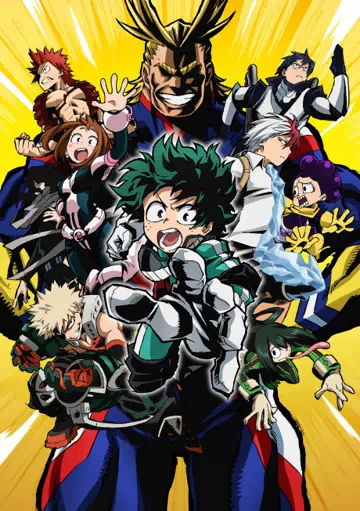 僕のヒーローアカデミアTV · 2016 · 76%
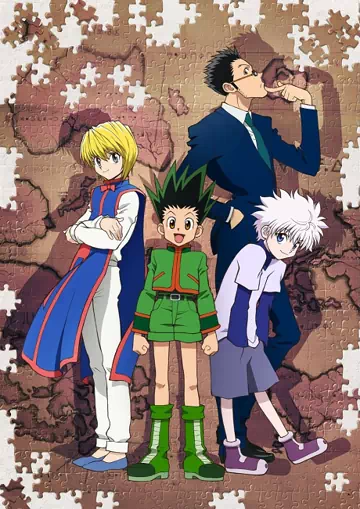 헌터 × 헌터 (2011년 애니메이션)TV · 2011 · 89%
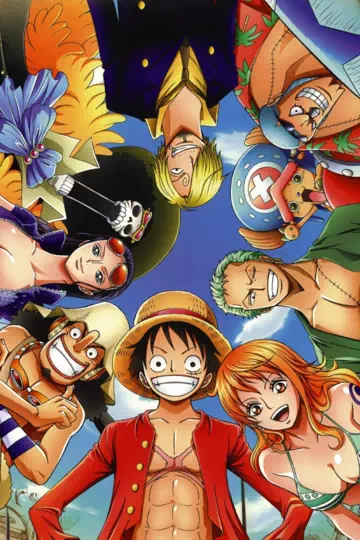 원피스TV · 1999 · 87%
This review is only about the anime, I haven't read the manga and don't plan too (I'll still watch season 2 tho). Light spoilers ahead ! Animation and visuals This is a strong point of this anime. The colors are vibrant but tone down when they need to, facial expressions and interactions are communicative, and the…
This review is only about the anime, I haven't read the manga and don't plan too (I'll still watch season 2 tho).
Light spoilers ahead !
Animation and visuals
This is a strong point of this anime. The colors are vibrant but tone down when they need to, facial expressions and interactions are communicative, and the fight choreographies are the best part in my opinion, the action scenes are impactful and way above other anime of this genre, they are over the top (1 vs 30 and highschoolers pulling pro martial artist moves) but that is part of what makes it fun to watch.
Characters
Most of the characters are likeable and have stylish designs. The main character Sakura is very dense and I found him a bit annoying at times but it's interesting to see him open up to others. Bofurin are all nice guys but maybe too much ? I'll get back to that later... The Shishitoren characters had an interesting dynamic but it was hard to picture a coherent group behind their actions.
My favorites are Suo and Togame.
Music
The soundtrack is decent, but nothing really caught my ears. The opening was nice but I really preferred the ending.
Plot, themes, and worldbuilding
I'm grouping these all together because all these elements will lead to my main problem with Wind Breaker.
The dynamic and relations between characters are touching but the narration is really basic, nothing original to note in the way the story flows but it works, Furyo aren't particularly known to have complex storylines anyway.
Some of the themes of Wind Breaker include discrimination, difference, and social awkwardness, but they feel empty because of the worldbuilding... With this kind of anime, you always need to apply a good dose of suspension of disbelief because these teens are gonna brawl in plain day on a busy streets and absolutely no authority figure is gonna show up ever, but it's even more true for this anime than in other delinquent anime/manga. In other Furyo anime/manga, cops and teachers are either incompetent, late to the party or just don't care at all, but at least they do exist, in Wind Breaker, the school staff and other authority figures like cops or parents are not even mentioned, they go to school but don't have class or teacher, they are "delinquents" but don't rebel against anything concretely...
A big part of delinquent manga and "rebel youth culture" in general is showing how young individuals can feel restrained by a system that doesn't always understand them, how they express individuality and alternative values in opposition to a system that tries to format them. In Wind Breaker there is no system that tries to restrain the characters, and no authority to rebel against, it's even the contrary, they (Bofurin) are the system and the authority, they don't meet any systematic contradiction to their ideals and so the values they display feels flat, and the "delinquent" tropes only become mere aesthetic... And that's a shame because the actions of Bofurin would've been even more meaningful and inspiring if they actually tried to do things their own way in a system that doesn't recognize their good deeds because they only see who they are and not what they do.
Conclusion
This review might be more subjective than others' because of my love for the Furyo genre. I found Wind Breaker enjoyable on many aspects, and I can understand people who rated it higher than me, not everybody approach animes with the same expectations. But this anime totally misses the point of the "Furyo" (delinquent) genre, and this one element ruined it for me and turned all these qualities into wasted potential.
Delinquents are a pretty common sight in anime. From classic Shounen like *Yu Yu Hakusho* to more modern series like *Tokyo Revengers*, we get plenty of them every year. So standing out amongst the crowd can be pretty difficult for a show like this. Do you get weird with it like *JoJo's Bizarre Adventure Season 4*? Or more heartfelt and personal, like *Great Teacher Onizuka*? Regrettably, most shows never really figure that out. Whatever they try, most fall short and aren't able to separate themselves from the pack. Well today I'm here to talk about one that manages to do just that, though only barely. A delinquent battle shounen that tries its best to fly and, by the end, is able to fly on its own. Originally created by Satoru Nii, animated and adapted by Cloverworks, directed by Toshifumi Akai, and with music by Ryou Takahashi and produced by Shinji Yamauchi, I give you... *Wind Breaker*.
Be warned, this review contains minor unmarked spoilers for *Wind Breaker*. It also contains major spoilers in some sections however these will be heavily marked to avoid accidents.
Production
As usual, lets start with something that's important for any anime, but especially so for flashy battle shounen, their production. Animated at CloverWorks, who are responsible for beautiful and well animated series such as *Wonder Egg Priority* and *Bocchi the Rock*, it shouldn't be surprising when I say *Wind Breaker* looks pretty good. It doesn't reach the same same levels of detail with its backgrounds and environments, nor is it quite as experimental with its animation, sure. *Wind Breaker* plays it pretty safe with both, staying well within the lanes and rarely doing anything *too* fancy. In doing so however, *Wind Breaker's* production manages to be consistent, remaining generally pleasant to look at at almost all times, never experiencing any kind of melt or fall off. Every episode has the same potential to pop off. Besides, there's one thing that *Wind Breaker* has over everything else this season: Fight Choreography.
Seriously, I cannot understate how good *Wind Breakers* fights are. From fluid full-body wide shots showing how every part of a characters body moves, to close ups with some pretty emotive facial expressions, *Wind Breaker's* action is top tier. What's especially nice about it though is that, compared to some of its contemporaries like *My Hero Academia* or *One Piece*, the fights are surprisingly grounded in reality. No insult intended of course, *One Piece* especially has been flying high recently with Egghead Island and Wano. But it's nice to have some more down-to-earth action for once. Fights where no one is "Supernaturally tough" or has named super moves like "Sky Shattering Fist" or other gimmicks. *Wind Breaker* is just normal dudes beating each other up. Sure, they occasionally jump to exaggerated heights for effect, maybe backflip into an axe kick or blow someone a few feet away with a punch, classic anime exaggeration. But comparatively, it's rather subdued. Powers wise I mean, these people absolutely get messed up.
This isn't to say *Wind Breaker* doesn't have some great visuals outside of the fights either. While not as experimental as *Bocchi*, generally staying on model and in style, *Wind Breaker* has a number of visual motifs and metaphors it often uses to spice up some of the more emotional conversations. The use of Light and Dark for mental states, walking on glass or a tightrope for precarious positions, the use of empty space for that feeling of being alone, composing a scene to really sell the size and support of the class, all the classics. And sure, none of these are really new, we've seen them before. But *Wind Breaker* executes on these established visual ideas pretty well, with some good direction to keep them interesting. All in all, *Wind Breaker* stands out primarily for its fight choreography and animation, doing just enough everywhere else to not drag those big action moments down. So if it's
The best way to look at Wind Breaker is as a sort of postmodern delinquent anime. I know that sounds high minded for an otherwise simple show, but Wind Breaker's main goal is to directly interrogate the genre's relationship between strength, violence and self determination. In a romantic sense, the Japanese delinquent…
The best way to look at Wind Breaker is as a sort of postmodern delinquent anime. I know that sounds high minded for an otherwise simple show, but Wind Breaker's main goal is to directly interrogate the genre's relationship between strength, violence and self determination. In a romantic sense, the Japanese delinquent isn't a lowly crook but instead are rebels against a society that seeks to hold them down. The fantasy comes from the idea that once you're strong you'll be free to do whatever you want.
But what does it mean to be the strongest? To be free? Protagonist Sakura thinks he's on the fast track to becoming the cool mysterious badass at the top of the wild school (think Yusuke Urameshi from Yu Yu Hakusho or Oga from Beelzebub) only to discover it's been reformed into some sort of paramilitary style community outreach program and everyone from his classmates to the townspeople are weirdly nice. Seeing Sakura go from Mr Billy Badass to a quivering tsundere now that he actually has to make friends and actually reach out to people is one of the series more entertaining and charming aspects.
The bulk of the show is the impromptu tournament arc between Furin and rival gang Shishitoren and it's where the show highlights its strengths and weaknesses. For one thing, it's got some serious animation chops for its hand to hand fighting scenes. Fluid, well choreographed and weighty you really feel every punch kick slam and throw. It's admittedly a bit too liberal with geography (the use of spinning 3D backgrounds is thrilling and impressive but sometimes ends up making you lose track of where exactly the characters are in relation to each other) but the animation and choreography make up for it. Some moments feel like the punch exchanges from DBZ except every individual hit is animated instead of on a loop.
Characters have their own unique fighting style, from Sakura's emphasis on weighty kicks, Touma and Sugishita's no nonsense beatdowns, Taiga's German suplexes and Suo and Kiryu's free flowing martial arts styles. Cloverworks and in particular animator Kazuyuki Asaka did a fantastic job adapting and expanding the series myriad fight scenes, and the show in general displays solid effective directing.
But just as important to Wind Breaker as the fighting is the drama, and it's where the show is somewhat shakier. The majority of the fights in the Shishitoren arc soon reveal themselves to actually have an added level of personal drama beyond just simple fisticuffs. Fights climax in big emotional displays where characters show their capacity for empathy and shout earnest stuff at each other like "What are you really fighting for!" or "This isn't the you I know!" On the one hand I appreciate the attempt at added complexity and use of striking symbolic imagery even if it isn't subtle (they're literally having a tournament where every character is pretending to be someone they're not in a movie theater on a stage) and I like how the characters operate as foils for Sakura. But it does end up feeling melodramatic at times as the show can overdo it with all the heavy music and big flashbacks. Having the tournament arc so early on is understandable; you want a big fight arc early, you want to show off all the fighting styles and you want a big event that establishes what the status quo is like afterwards. It just needed some more breathing room to establish all these relationships it clearly wants you to feel are important.
The episodes after the big tournament arc, despite being slower and less action packed, refocuses squarely on Sakura and his burgeoning arc into becoming a leader and it feels less heavy handed going from there. Sakura's feelings are actually pretty complex and say alot about both his character and the expanding cast around him.
Like Sakura himself, Wind Breaker's got a big heart but it needs a bit more maturing to do before it reaches its full potential. Thankfully, it has all the tools to get there.
* In the midst of the overcrowded Fantasy animes in Spring 2024, from the comeback season of My Hero Academia and Demon Slayer, heavy Isekai hitters such as Mushoku Tensei, Slime, and Konosuba airing simultaneously this season that pleases the hardcore Isekai fans, newcomers arrive as Kaiju No.8 takes the spot for…
*
In the midst of the overcrowded Fantasy animes in Spring 2024, from the comeback season of My Hero Academia and Demon Slayer, heavy Isekai hitters such as Mushoku Tensei, Slime, and Konosuba airing simultaneously this season that pleases the hardcore Isekai fans, newcomers arrive as Kaiju No.8 takes the spot for newly come Shounen audiences, and oldtime classics such as Spice and Wolf are returning for a brand new reboot of the series. One anime that stands out from the rest, earning the #7 spot for the most popular anime of Spring 2024 (data from Anilist on May 31, 2024), WIND BREAKER is an anime that you wouldn't expect standing up firmly amidst the heavy hitters this season, but through it's refreshing and intriguing plotline, it is bound to grab people's attention and hold firm into it for longer. *
WIND BREAKER offers a refreshing yet familiar plotline mixing high school anime tropes and delinquent tropes, forming a blend of refreshing plotlines and sequences that went on a different path from your usual action anime. We follow the main character, Haruka Sakura (Yuuma Uchida), through his journey of softening up from the tense environment he used to live in. Sakura is not the most interesting character in the series, especially when his motivations and the attention of the series aren't mainly focused on him, as he's mostly being used as a vessel to progress the plotline. However, the supporting characters of this series, mainly Togame (Yuuichirou Umehara), are a huge standout even with their short presence due to their convincing character revelations. Other side characters in the show are fun and watchable in their own right, but they're not a huge standout since they didn't get enough screen time to fully flesh out their own characters. *
One huge standout of the series that definitely brings people to watch this series is its action. The anime scene is filled with power fantasies and weaponry combat that's fairly entertaining in its own right, but there is a huge underrepresentation of hand-to-hand combat in recent anime, which this series brings to the forefront of the action-oriented sequence of the show. Not only that, the animation might not rival that of this season’s heavy hitters, but it still stands out on its own with the stylistic hand-to-hand fighting sequences where you can actually feel the weight of the punches. In addition, it doesn't take its actions nonsensically, as the punches of each character reveal their background and motivation for being in the position that they are, a great method of storytelling in an action genre. *
Despite all of that, the series still has a long way to go when it comes to its story. It might be really entertaining for now, but it's the type of series that I will eventually forget about the plot and characters. The first few episodes are a little slow and can be out of place sometimes, not to mention where the series takes on a drastic turn with its story, which I would argue is where the series truly shows its real strength. However, the series hadn't convinced me to care or leave a lasting impression on me once the series ended, as there are still elements of the show that they presented that have a lot of potential for story but have never been used.
In those cases, a second season of WIND BREAKER might be glossed over, but the series already has the right ingredients from its intriguing and stylistic hand-to-hand action sequence, more exploration in its storytelling from the world they've built, and greater character growth for these characters. If you have all of these things and cook them well, it might turn the future of this series from good to great. *
Preface Wind Breaker is a modern delinquent anime that I would describe as a hidden gem. My statement may seem exaggerated because an average weeb must be living under a rock if they aren't, at least, aware of its existence. Many viewers compare the anime with TR and hype up the animation, fights, and sometimes the…
Preface
Wind Breaker is a modern delinquent anime that I would describe as a hidden gem. My statement may seem exaggerated because an average weeb must be living under a rock if they aren't, at least, aware of its existence. Many viewers compare the anime with TR and hype up the animation, fights, and sometimes the character designs. However, few discuss the intriguing characterization of the main cast and their dynamics that, in my opinion, outshine most shounen battle anime.
Main Criticism
Before I attempt to prove my point, I must point out some evident omissions that initially hindered my enjoyment. Where are the parents, teachers, and police? There are strong indications about their family status here and there, like Sakura having no contacts on his phone and Umemiya growing up in foster homes. Furthermore, we can assume that the local police either do not arrive on time or are incompetent. The question is, how do we explain the absent teachers in a high school setting? The students regularly hang out on the school grounds and ditch classes to patrol. It would be way more compelling if they established a special education program, funded by either the government or a certified private organization, that encourages volunteer work for children from broken homes; a readjustment to society, or the nurturing of a task force. I hope these aspects get addressed in the future.
Characterization & Dynamics
The show opened with symbolic imagery that portrayed Sakura's complex psychology, an ordinary tale among the shonen protagonists at first, depicting discrimination, bullying, abandonment, and maybe worse. Sakura, the victim of this abuse, chose violence, aggression, and solitude as his defense mechanism, rationalizing that fighting was the only way to get rid of toxic individuals, and his fists gradually evolved into his language. His reactions to kindness also hinted at his self-loathing and tendency to self-sabotage. Being ridiculed for his unconventional appearance and rough-at-the-edges behavior, he regarded himself as intimidating. As such, it led to a quest for self-recognition. If he showcased his superior strength, he would be worthy of everyone's fear and respect.
His mindset crumpled after his fateful encounters with Bofurin's and Shishitoren's leaders. Umemiya was the first to spark a fire in his heart, pushing him to revisit his worldview. While he pursued conflict and a lonesome lifestyle, Umemiya strived for companionship and peace despite his demanding position as a gang leader. Sakura could not grasp this foreign concept, although he witnessed strong people naturally gathering around him. On top of that, he found pleasure in this lifestyle. Communication, skinship, friendship, and camaraderie fulfilled the basic human desires he craved and never received. His bashfulness and shyness may come off as funny and cute, but they are a product of alienation.
On the other hand, Tomiyama was a catalyst for his development as the mirror image of his future self. Similarly to Sakura, he pursued self-fulfillment, believing that happiness and freedom come with strength. This ambiguous obsession caused him to ostracize his companions and become an empty shell of his ambition. His greed started eating him inside out, preventing him from picking the pieces together and widening his lens. It was thanks to his genuine connection to Togame that snapped him back from his tunnel vision. I am not surprised that Sakura admitted their similarities. If he were to embark on this journey, a never-ending vacuum awaited.
Accepting his flawed views, Sakura strayed from his old habits. However, he was lost. What was he supposed to do, especially when he took up a leadership position. Luckily, his curiosity got the better of him, and he consulted the second-year grade captain. Kaji is like a feral beast in disguise. He appeared calm and collected, standoffish and aloof, until you get under his skin. This contrast puzzled Sakura and, even








아직 글이 없어요. 첫 글을 남겨 보세요.
내 시청 상태