


NIPANIPA 觀眾
還沒有評論。
撰寫評論
NIPANIPA 觀眾
還沒有評論。
撰寫評論AniList
86/ 100
A Happy alien, Takopi, lands on Earth with one mission: to spread happiness! When he meets Shizuka, a lonely fourth grader, he vows to bring back her smile using his magical Happy Gadgets. But as he uncovers the pain in her life, Takopi learns that true happiness may require more than gadgets.
(Source: Crunchyroll)
來源: AniList · 英文原文
 【我推的孩子】第3季TV · 2026 · 86%
 僕だけがいない街TV · 2016 · 81%
 僕のヒーローアカデミア4TV · 2019 · 78%
 寄生獣 セイの格率TV · 2014 · 81%
 ダンダダンTV · 2024 · 83%
 【推しの子】TV · 2023 · 84%
 ようこそ実力至上主義の教室へ 3rd SeasonTV · 2024 · 78%
 【推しの子】第2期TV · 2024 · 85%
 青春ブタ野郎はおでかけシスターの夢を見ない電影 · 2023 · 79%
 戦隊大失格TV · 2024 · 72%
 魔法使いの嫁 SEASON2TV · 2023 · 77%
 藤本樹17-26電影 · 2025 · 79%
Thank God, finally it’s over, _or at least that’s what I keep telling myself._ I am genuinely tired after finishing the anime, wretched even, but I think that's alright. I never watched this show for some cute, happy feeling anyway. I knew what was coming, but man, it still hit bad. I'm not here to critique the show,…
Thank God, finally it’s over, _or at least that’s what I keep telling myself._
I am genuinely tired after finishing the anime, wretched even, but I think that's alright. I never watched this show for some cute, happy feeling anyway. I knew what was coming, but man, it still hit bad. I'm not here to critique the show, honestly, so sorry about that. I just want to get my feelings out and talk about it, because this... this felt hard.
You go in thinking you're prepared. You see the cute, pink, Kirby-looking octopus alien and you know it's a trap. It’s like seeing Kyubey from Madoka Magica for the first time; a part of your brain, the part that’s been hurt by anime before, just screams ''RUN'' The show even gives you two content warnings at the start, which is basically the anime equivalent of a bouncer telling you, "You sure you want to go in there, pal?" But you do it anyway. Because you have to know, you want to know, you are already too deep.
The whole thing starts as this twisted parody of Doraemon. You have the helpless kid, Shizuka, and the magical friend from the future, Takopi, with his pouch of _'Happy Gadgets'_ But this isn't about getting better grades or standing up to a neighborhood bully. This is a world of soul-deep neglect and abuse that feels so real it’s suffocating. And Takopi, with his simple, happy brain, just makes everything a million times worse. His attempts to help are pure chaos. He gives Shizuka a _'Happy Ribbon'_ to mend friendships, and she uses it to hang herself. The camera just stays on her, lifeless, and in that moment, the show looks you dead in the eye and tells you there are no easy fixes here. There is no magic that can patch over this kind of pain.
From there, it just descends. It’s not a slow burn of psychological horror like Oyasumi Punpun; that story is a surgeon's scalpel, meticulously dissecting a soul.
The whole environment is a non-stop barrage of misery that just keeps going, never giving you a moment to breathe. The visual style is a huge part of the pain. It’s this constant whiplash between Takopi’s original sin's soft, storybook world and the grim, dirty, dead reality the kids live in. It’s like if A24 decided to do a gritty, psychological reboot of Barney & Friends the dissonance is the point, and it makes the horror feel so much more violating.
What really wrecks you is that there are no real monsters. Not among the kids, anyway. It’s like Lord of the Flies, but the island is generational trauma and the beast is the complete and utter failure of every single adult in their lives. You hate the bully, Marina, with a passion, but then you see her home life, and you realize her cruelty is just a distorted echo of the abuse she suffers from her own mother. You see the _good boy_ Azuma, so starved for love that his mother making and then taking away his favorite pancakes because he didn't get a perfect score on a test is enough to break him. They’re all just children, hurting each other because they’ve been hurt, and it’s a cycle that feels impossible to escape. It’s a different kind of darkness than something fantastical like Berserk. That’s a nightmare you can wake up from. This feels like it could be happening down the street, and that’s what makes it so much harder to stomach.
9.5/10 will never watch again
(Video includes audio. Be sure to unmute) In 2012, director [Joshua Oppenheimer](https://en.wikipedia.org/wiki/Joshua_Oppenheimer) directed a film called [*The Act of Killing*](https://en.wikipedia.org/wiki/The_Act_of_Killing). In the course of the documentary, Oppenheimer interviews perpetrators of the [1960s mass…
(Video includes audio. Be sure to unmute)
In 2012, director [Joshua Oppenheimer](https://en.wikipedia.org/wiki/Joshua_Oppenheimer) directed a film called [*The Act of Killing*](https://en.wikipedia.org/wiki/The_Act_of_Killing). In the course of the documentary, Oppenheimer interviews perpetrators of the [1960s mass killings](https://en.wikipedia.org/wiki/Indonesian_mass_killings_of_1965%E2%80%9366) of alleged communists and those who opposed the New Order regime in Indonesia. There’s a paralyzing, depressing candidness with which the killers (many of whom at the time still retained power of some sort decades later) describe the killings they committed, sometimes [citing violent movies](https://i.imgur.com/28IUgva.png) as inspiration, and in how they go about casting people to [re-enact the murders](https://i.imgur.com/pPieBgK.png). It’s as though they’re trying to evoke memories of a better time through recollection and fondness defined by bloodshed and spiritually recreating it. In juxtaposing this candidness with both reality and surreality, the film makes the case that the people who carry out such horrified actions are not monsters in the abstract, but [human beings](https://en.wikipedia.org/wiki/Pancasila_Youth). Given the right circumstances (such as backing by Western governments), they will manifest, flourish, and linger. We cannot say “[Father, forgive them, for they know not what they do](https://i.imgur.com/buBkb3C.png)” when they [most certainly know](https://i.imgur.com/MILUOu8.png) what they did, and seem to celebrate it.
But therein lies an important distinction – staring in the face of evil is not the same as condoning evil. It’s the kind of space that allows media to depict truly unpleasant subjects in ways that, at least hopefully, demonstrate a clear difference between what occurs in the text versus the intent behind the action. *Takopii’s Original Sin*, as directed by [Iino Shinya](https://anilist.co/staff/121793/Iino-Shinya), relies on its audience understanding this distinction and navigating through the gross inhumanity of everything inflicted by responding with revulsion. When Marina [laughs at Shizuka’s expense](https://i.imgur.com/XQZCfJP.png), or Azuma’s mother spews such [disparaging words of unacceptance](https://i.imgur.com/RaPNbOd.png), or Shizuka’s lips finally curl into a [sincere smile as something horrifying transpires](https://i.imgur.com/gVJqv6D.png), the show does not argue that these are good things. If it truly wanted to advocate that violence was the ultimate solution to the characters’ problems, it wouldn’t spend so much of its time having those same characters disgustingly and grotesquely falling further and further into their own deep, dark whirlpools. For the viewer, it’s violence absent catharsis. Every punch, slash, self-affliction, and emotional manipulation makes the characters wholly commit to their own atrocities, all while making them mistakenly think that salvation lies at the other end of the tunnel vision.
(Credit to [Saitou Keiichirou](https://anilist.co/staff/134254/Saitou-Keiichirou), the director for *Bocchi the Rock!* and *Frieren* for the animation clip, and [Iida Yuichiro](https://anilist.co/staff/255521/Iida-Yuuichirou) for the key animation frame. Shinya’s direction frequently calls for warped perspective and a consistent tonal unease, a visual manifestation of how the narrative keeps the children in its uncertain center)
It’s not difficult to understand why these children would internalize to such an extent that this is the case, as such an ideology is not born from nowhere. With the overwhelming presence of violence in the children’s everyday lives from those who are supposed to take care of them, a seemingly immutable truth is conveyed: violence is the response to circumstances beyond a character’s control, a survival strategy born from malice and for the purposes of self-preservation. It is witnessed through the parents seeing the world they want to have c
takopi's original sin is an excellent case study on child psychology, human morality, right and wrong, innocence and the loss of it. every decision made in the story serves to give even further insight on the plot and characters to strengthen at least one of these themes, not just for shock value (though in the first couple of episodes the shock value is very much there and drew in the fake edgy viewers who _think_ they're into psychological shows)
(i'm about to use an em dash; i'm not using chatgpt, i'm just a former fanfic writer)
the story—amplified to an extreme degree by the animation, direction, and sound—presents itself in a way that makes you root for one of its core [human] characters, then rips that foundation apart by showing that these characters are very much flawed and are not saints. not one of them is innocent, at least that's what we're led to believe on a surface level.
spoilers in the next paragraph
we're first introduced to shizuka and instantly what happens in episode 1 hits like a bombshell, leaves us wondering what happened to her which led her to take such an action. and we go in with marina pinned as "bad" and shizuka pinned as "good". but as we progress into the story, we learn that shizuka is also a sociopath who manipulates azuma to keep herself safe and protect her delusion, all because he receives the validation he craves from his mom, from her. so surely azuma is the only victim, right? episode 4, we learn that, in the past (or in the future), azuma leaves a relationship with marina for shizuka. this plot twist was a controversial one, but it serves to further show us how none of these people are "innocent" people.
>"How can a bad kid be a good kid at the same time?"
the truth is, how can we say one is truly not innocent? especially if that person is a child. does one's circumstances make them innocent, regardless of their deeds? can redemption and forgiveness come from sinners regardless of their sin, simply because they've been hurt in the past? can you blame a child for turning to negative outlets for their trauma, when their trauma has taught them nothing but? these are complicated questions which i will not be answering, but they are questions that takopi's original sin poses, makes you ponder. and no matter what answer you come up with by yourself, the show has achieved its goal.
>"Maybe the mistake was thinking I could save her"
the world of takopi's original sin might not be like our own, but that doesn't mean it doesn't play by the same psychological rules. the traumas these kids face seem to be amplified tenfold to what the average traumatic childhood is like in real life, and there exists an overly-positive, innocent presence in takopi to balance that out, both for better and for worse at different points in the story. i find myself drawing parallels to things i've experienced growing up, things others i know have experienced. and that's what makes it that much more powerful. (hopefully) not many of us are able to say we fully relate to shizuka, marina, or azuma. but many of us still are able to relate to them nevertheless, at least to some capacity. and that fills one with both dread and hope.
i leave you with this thought:
>"No man chooses evil because it is evil; he only mistakes it for happiness, the good he seeks" -Mary Wollstonecraft
Spoilers For Anyone Who Has Not Watched This Masterpiece Yet Takopi's Original Sin is one of those animes where I am happy with how many episodes it has. Those 6 episodes were enough to make a huge impact towards myself and others. The whole concept of an alien from another planet misunderstanding the situation going…
Spoilers For Anyone Who Has Not Watched This Masterpiece Yet
Takopi's Original Sin is one of those animes where I am happy with how many episodes it has. Those 6 episodes were enough to make a huge impact towards myself and others. The whole concept of an alien from another planet misunderstanding the situation going on with these young children and believing that it itself can fix everything is very unique and has never been done before (to my knowledge). Little by little, Takopi is able to understand what is going on and makes an attempt to make Shizuka happy, It is then introduced to what Shizuka has to go through after it is beaten to a pulp by Marina. It later changes its narrative towards trying to make Marina happy after understand her perspective of what happens at home with her mom being abusive. This then changes to trying to make everyone happy. Although Takopi is mistreated by both Marina and Shizuka, he still makes an attempt to make everyone happy.
In my opinion, I believe Takopi represents cope. Takopi was trying their best to make Shizuka happy and stuck with her all the way through even through all the mishaps going on. After realizing the mistakes it made (or sins I should say), it understands that the best way to move forward is to not do anything at all. This does not mean that Takopi was useless in all these events. It was able to connect Shizuka and Marina through itself. I believe that when both of them kind of sort of remembered Takopi, that was them bonding over their own struggles and being able to cope with each other. They understand that they lived in a toxic household and that both of them have terrible parents, and they were able to trauma bond over that. It's just a reminder that people can be bad, but it does not mean people are always bad. There will always be evil inside someone, but it does not mean they are evil themselves. That is the lesson I believe this anime is trying to teach us.
Takopi is suppose to make everyone happy, and even kills someone to make a certain person happy. How can an alien whose life purpose is to make people happy kill someone for someone else's benefit? Takopi's mistakes to let Shizuka borrow a happy gadget without supervision led to it trying to fix everything. It broke one rule, and now has to face the consequences of its actions. In the end, it accepted that the only way to save a life is to give its own. It was fate that someone had to go, and it ended up being Takopi's own life. To save a life is to give up its own. In doing so, It was able to fix its own sins and completed its conquest of spreading happiness through the galaxy. This anime is the first 10/10 that I have rated. Highly recommended.
Warning: This series contains themes of suicide and depictions of abuse and violence. If you don’t want to read something about those topics, please head elsewhere. On top of that, if you or someone you know is dealing with any of this, please seek help from the proper authorities. Take care.
Suicide and abuse are topics that anime and manga is deal with constantly. Welcome to the NHK is probably my favorite example of this where the protagonist and several other characters come close to the brink but they are saved. Other anime like A Silent Voice and Wonder Egg Priority as well.
Abuse, bullying, and violence are recurring themes in anime, but Sangatsu no Lion handles bullying with grace, especially in its second season. The show shifts focus from Rei’s internal struggles in Season 1 to the Kawamoto family, particularly Hina (Hinata being her full first name). After standing up for a bullied friend who transfers schools, Hina becomes the new target, while the school does nothing to help. Rei, now in a better mental space, supports her along with the Kawamotos. This storyline portrays a mature and realistic approach to bullying, highlighting Rei’s growth as he begins helping others instead of being consumed by his own depression. It ends with the school eventually being forced to act and switch teachers, which slowly resolves the issue.
Your Lie in April is another series that comes to mind. It doesn’t really focus on bullying but it does focus on abuse, which is a central theme of Takopi as well. Our protagonist is a young lad named Kousei Arima, who is a piano prodigy. He was having a great time playing piano with his mother, but then his mother received a life altering, and even fatal illness that made it impossible to play. So she projects everything on her child. This leads to horrific abuse where Kousei gets visibly beat up and he even has trauma related to his abuse. Hence why he abandons piano by the time we see him.
All sounds good, but YLIA does a terrible job actually exploring abuse and how terrible it is for the child. Between having an actual adult excuse the abuse to a damn kid, having terrible slapstick comedy that just...isn’t funny and feels gross, and having Tsubaki, a childhood love interest, beat the crap out of him multiple times is fucked. On top of that, Kousei even forgives his mother in the middle. Now, obviously, that’s well within his rights to do so, but how its executed is so shit. He just sort of gets over his trauma related to piano playing and seems happy over his mother. It all feels wrong.
Now, why would I even bring all of this up for Takopi? After all, but 3-Gatsu and YLIA are much longer stories than Takopi. Well, very few manga and anime are quite as visceral about it as Takopi’s Original Sin is. No other piece of media I’ve seen really showed such a horrific way of suicide, especially someone that’s so young. I just...couldn’t process it for a few minutes. It was very effective and I couldn’t believe an anime could get away with it. It sort of shook me out of my terrible thoughts, so for that, I greatly appreciate this show in some ways. The abuse by the parents are never justified, never excused, and are always used as an explanation of the children’s behavior. This is good!
We are introduced to these terrible circumstances through the lens of Takopi himself. He is a little alien from a perpetually happy planet that never deals with pain and suffering. He has magical tools that allow him to make people feel happy (at least, that’s what he thinks). Things like flight, a rope that never ends (if you know, you know), and so on. His primary goal is to help people who are feeling sad feel better about themselves. It’s kinda like a more fucked version of Fairly Odd Parents.
You can see that he is not only naive, but also inept when it comes to actually helping these broken children. Marina is the primary antagonist and she beats up and taunts Shizuka because of her own family issues th
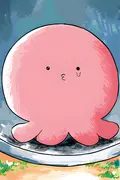 Takopi主要聲優Kurumi Mamiya

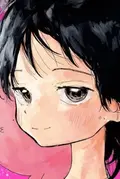 Shizuka Kuze主要聲優Reina Ueda

 Marina Kirarazaka主要聲優Konomi Kohara

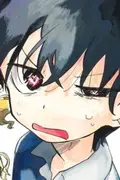 Naoki Azuma主要聲優Anna Nagase

 Junya Azuma聲優Ryouta Oosaka
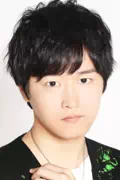
 Chappy聲優Natsumi Fujiwara

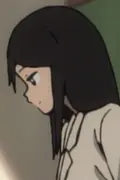 Sensei聲優Mari Hino

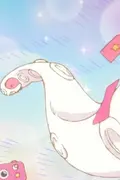 Happy Mama聲優Mamiko Noto

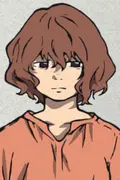 Marina no Haha聲優Ayumi Tsunematsu





還沒有文章。來發表第一篇吧。
我的狀態